Global share markets showed resilience over the year (ending 31 March 2025), navigating a complex environment marked by ongoing uncertainty. Inflation has continued to ease, and central banks in most major economies have begun cutting interest rates. It has not all been smooth sailing, with markets experiencing some significant periods of volatility in August 2024 and again in March 2025.
It’s important to note that since year end on 31 March, markets have shifted – with new US tariff announcements and rising global trade tensions leading to a bumpier ride for investors.
All funds in the BNZ KiwiSaver Scheme have delivered positive returns in the year ending 31 March 2025.
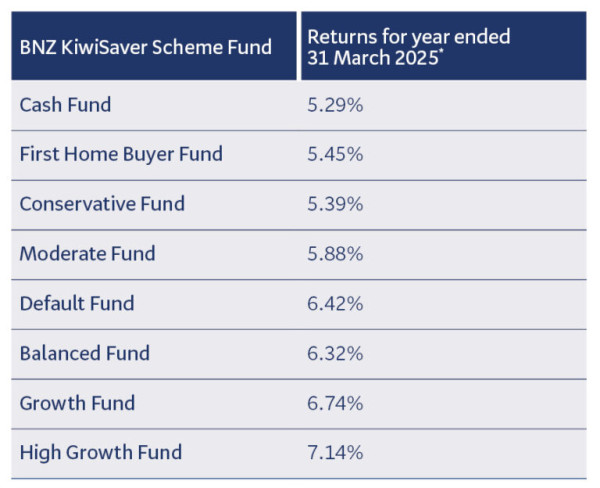
Returns are calculated after deducting Management Fees but before deducting tax.
Inflation moving in the right direction
During the year, markets generally responded well to promising signs that inflation was getting under control. A key theme globally has been the possibility of a “soft landing” – with inflation falling while economic growth remains resilient. This helped support investor confidence, even in the face of persistent geopolitical tensions and cost-of-living pressures.
In New Zealand, inflation also cooled allowing the Reserve Bank to cut the official cash rate from 5.5% in August 2024 to 3.5% in April 2025. This has helped to ease mortgage rates and lift the local share market.
Big tech’s shifting landscape
In the US, share markets had another strong year in 2024, largely driven by big technology names like Apple, Microsoft and Nvidia. However, sentiment shifted in early 2025 after Chinese firm, DeepSeek, released a new open-source AI model with lower energy and processing demands. Investors grew concerned that large tech firms may have over-invested in data centers and high-end chips, prompting a sharp sell-off in the sector.
Trade tensions fuel renewed volatility
Global policy shifts have also contributed to market uncertainty. Donald Trump’s return to the US presidency, alongside a Republican-controlled Congress, raised the prospect of new tariffs on global trade. Markets have responded cautiously, with US shares underperforming in the first quarter of 2025. Since 31 March 2025, markets have shown increased volatility as a result of new tariff announcements, and this volatility is expected to continue.
Investment returns broaden
By contrast, European and Asian markets performed well during the period. Europe’s recovery was supported by investor inflows and optimism around potential fiscal stimulus. In China, equities benefited from interest rate cuts, continued government stimulus, and growing enthusiasm around the country’s AI sector. However, escalating trade tensions between China and the US cast a shadow over the outlook, with retaliatory tariffs fuelling uncertainty.
More volatility on the horizon
For BNZ KiwiSaver Scheme members, the past year has highlighted the importance of staying focused on your investment goals – whether short or long term – even as markets shift and evolve. Market volatility is expected to continue as a result of ongoing global uncertainties. Geopolitical tensions, shifting economic policies, and unpredictable market responses to inflation and interest rates will continue to create instability. While periods of volatility are unsettling for investors, they are part of the process. In most cases, these kinds of movements shouldn’t influence the decisions you make about investments. Instead of focusing on the turbulence, take a few minutes to check you’re in the right investment fund for you.
- Wealth & Personal Finance