Listed in: Customer stories
Etrucks: Keeping New Zealand’s economy moving – one kW at a time
When Etrucks® saw an opportunity to help heavy-vehicle operators reduce fuel risk and emissions, it set out to make electric transport practical for New Zealand businesses.
0 minute read
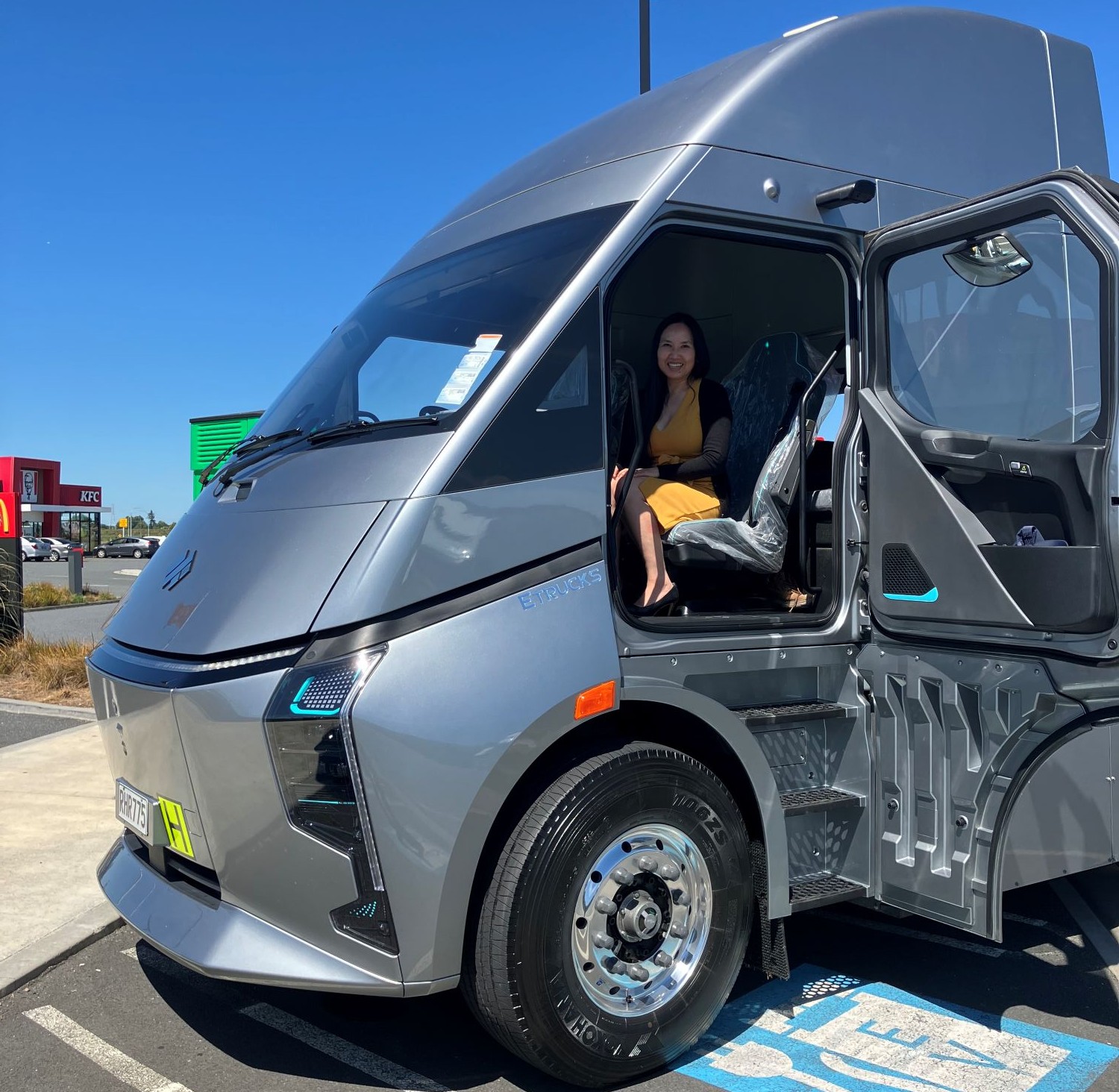
Every day, heavy vehicles carry the goods New Zealand relies on, from food and building materials to farm supplies and stock for store shelves. They transport around 93% of the country’s freight by weight, ensuring essential goods reach households and communities, and making them central to how businesses operate.
For many operators, those vehicles are also long-term, high-cost assets. Decisions about replacing or upgrading them are not made lightly. Businesses need to know the numbers work, the technology can handle the job, and the supporting infrastructure will fit their day-to-day operations.
Fuel is one of the biggest variables in the equation. For diesel-heavy businesses especially, fuel is not only a cost issue, but a resilience issue too. The ongoing conflict in Iran has added to volatility in global fuel markets, showing how quickly events offshore can flow through to local operators.
In appropriate use cases, electrification can help reduce reliance on imported fuel and make greater use of New Zealand’s largely renewable electricity system. It may also support more predictable operating costs and lower emissions operations, depending on how vehicles are used, charged and maintained.
Helping businesses move heavy transport and machinery into the electric era
This is where Etrucks® sees the opportunity. Etrucks® says it has spent nearly a decade helping New Zealand operators move heavy vehicles and machinery from diesel to electric, with a focus on making lower-emissions options practical for real-world commercial use.
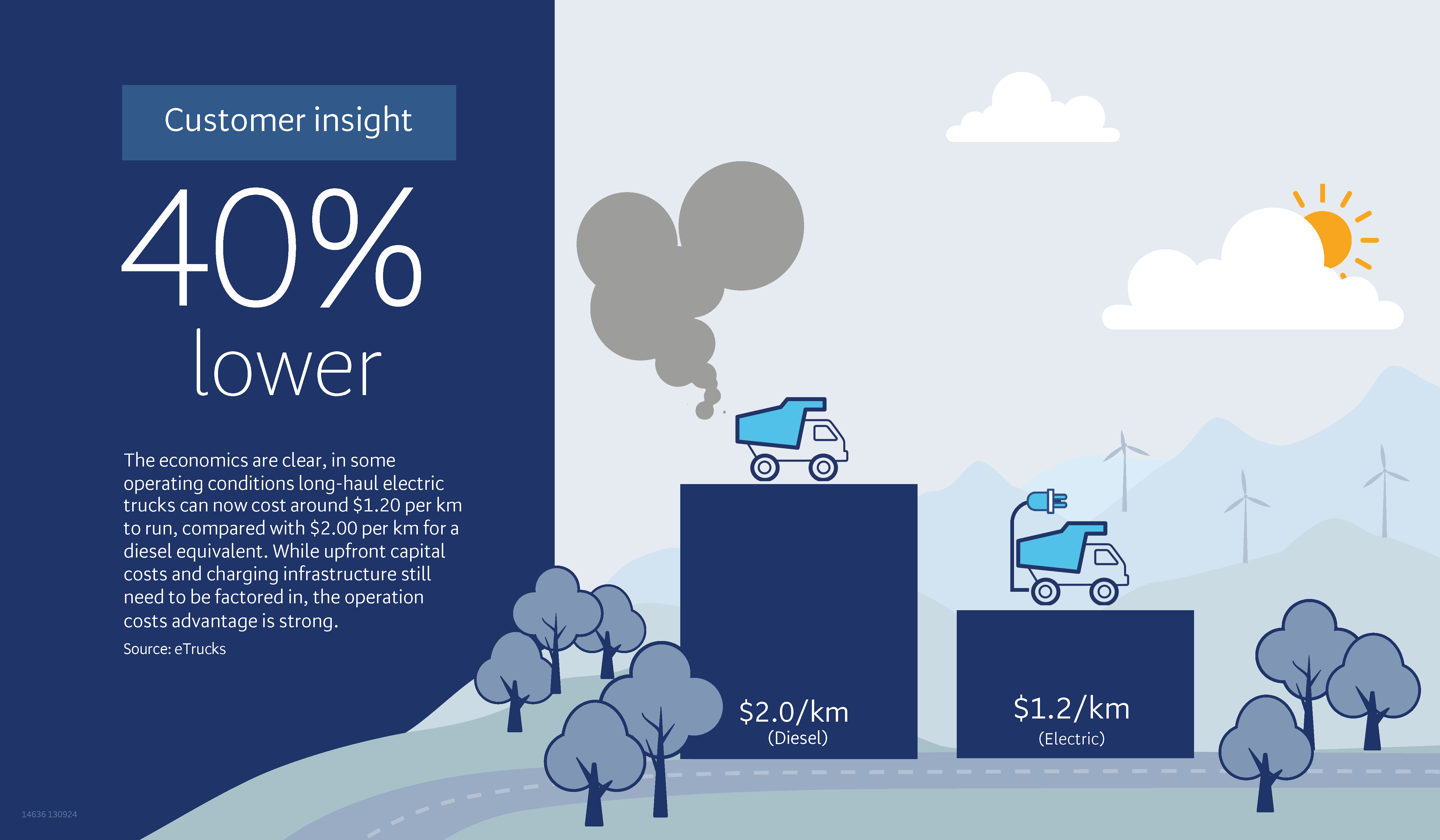
When Etrucks® first entered the market, early adopters were mainly motivated by sustainability goals and a willingness to trial new technology. Today, the decision-making has shifted. Businesses are increasingly focused on the commercial case: lower running costs, more certainty over energy use, reduced exposure to diesel price spikes, and confidence that the technology is maturing quickly.
He says one customer expects, based on its own usage profile and energy costs, to recover the additional cost of its electric truck in as little as around two years from energy savings alone.
The technology has also moved quickly.
“The market has moved from early diesel-to-electric conversions to trucks that are now designed as electric vehicles from the ground up. That has improved range, brought prices down and delivered better vehicle performance,” Ross says.
Battery quality for commercial vehicles has advanced significantly, with some warranties now covering around 4,500 cycles or up to 1.5 million kilometres. This may help reduce concern about battery degradation for first owners, and support confidence in the second-hand market, depending on the vehicle, battery condition and warranty terms.
For drivers, the change is noticeable too. Electric trucks offer less vibration, less noise and strong hill-climbing capability, with some models delivering up to 1,400 horsepower.
Adoption is already happening across a range of sectors. Ross says freight and logistics businesses are moving first on heavy trucks, while other industries are starting to electrify machinery where the economics stack up.
“We’re seeing larger construction and infrastructure operators adopting electric wheel loaders and excavators where fuel savings are meaningful, especially in the 16–20 tonne range and above.”
Hybrid machinery is also playing a role in forestry and remote operations. Ross says one hybrid wheel loader has reportedly achieved fuel savings of up to 60% in an off-grid forest environment, although actual savings vary significantly depending on the equipment, operating conditions and usage profile.
Ross acknowledges while upfront capital costs and charging infrastructure still need to be factored in, the operating cost advantage is now strong enough that finance teams and accountants are increasingly part of the conversation, not just sustainability teams.
As with any significant capital investment, the business case will depend on the operator’s circumstances, including routes, payloads, charging access, electricity costs, maintenance requirements, battery life, residual value assumptions and available infrastructure.
Who’s adopting electric heavy vehicles?
Smaller machinery is also gaining traction where reduced noise and vibration matter, especially in urban centres.
Ross says one of the clearest lessons from working with customers is that electrification is not just about buying a vehicle. Businesses need to plan for power supply, charging, and long-term operational needs from the start.
BNZ has supported Etrucks® with trade finance as the business has grown and worked with suppliers on different payment terms. For a company bringing specialist vehicles and machinery into New Zealand, Etrucks® says that support has helped them manage the practical realities of scaling in a capital-intensive market.
Ross has pointed to BNZ’s speed of engagement, willingness to understand the business, and genuine interest in what Etrucks® is trying to build in New Zealand’s heavy transport market.
For BNZ, the relationship reflects one way we can support businesses that are helping customers respond to productivity, cost and emission-related challenges.
Our business partners take the time to get to know you and your business, then bring together expert advice, industry know-how and specialist support. If you’re interested in finding out how we can support your business, get in touch with one of our business partners today.
Related articles
Taking the first steps to becoming a sustainably focused small business
Whether you’re a new or established small business, implementing sustainable practices can help reduce your business’s impact on people and planet, manage risk, and attract more customers.
Sustainable foundations paying off for Otis Oat Milk
Driven by its vision for a thriving and vibrant plant-based industry in New Zealand, Otis Oat Milk aims to revolutionise consumer choices without sacrificing taste or tradition.
ChargeNet: Powering Aotearoa’s EV future
CleanTech and sustainability are about providing what we need now, while ensuring future generations inherit a healthy local and global environment they can prosper in.
Grow your business with a BNZ Partner
Find out more
Information current as at 8 Aug 2026.
This article is solely for information purposes. It’s not financial or other professional advice. No representation or warranty is made as to the accuracy, reliability or completeness of any statement made in this article. For help, please contact BNZ or your professional adviser. No party, including BNZ, is liable for direct or indirect loss or damage resulting from the content of this article. Any opinions in this article are not necessarily shared by BNZ or anyone else. References to third party websites are provided for your convenience only. BNZ accepts no responsibility for the availability or content of such websites.